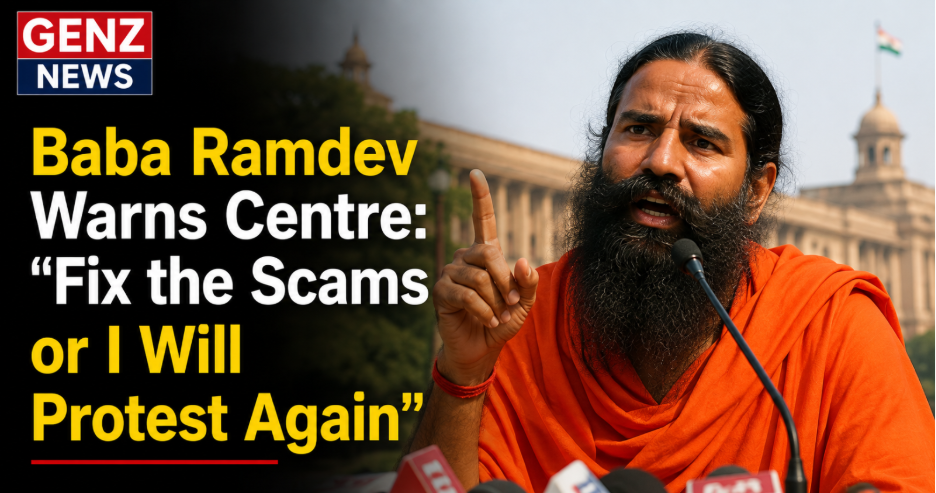
Yoga guru Baba Ramdev has issued a sharp warning to the Narendra Modi government, cautioning that he may be forced to launch a fresh agitation if alleged irregularities in India’s education system and government recruitment processes are not addressed soon. Speaking on India’s 80th Independence Day, the Patanjali founder invoked memories of his 2011 anti-corruption movement, signalling that patience within civil society over these issues is beginning to wear thin. The remarks add to the growing wave of news around student unrest and institutional accountability across the country.
What Ramdev Actually Said
Addressing reporters at Patanjali Yogpeeth in Haridwar, Ramdev did not mince words. He said the country was witnessing widespread “ghapla” — a colloquial term for scams or large-scale irregularities — spanning both the education sector and government job recruitment. His message to the Centre was direct: correct these problems now, or face renewed public agitation, including one led by him personally.
He specifically referenced his 2011 protest at Delhi’s Ramlila Maidan, a movement against corruption and unaccounted wealth that was eventually dispersed by a police crackdown. By bringing up that episode, Ramdev appeared to be signalling that his current warning is not just rhetorical — it carries the weight of a precedent where he has taken to the streets before.
The Core Complaints: Education and Recruitment
According to Ramdev, students across India have been raising several concerns that, in his view, the government has been slow to address. These include a shortage of teachers in schools and colleges, inadequate basic infrastructure such as water and electricity on campuses, and repeated allegations of examination paper leaks that have damaged the credibility of the testing system.
On the recruitment front, his allegations were more pointed. He claimed that money power and corruption were influencing selection processes for government jobs, alleging that some candidates were being asked to pay large bribes — reportedly running into crores of rupees — to secure positions. He argued that this undermines constitutional principles of merit and fairness, calling it deeply troubling that such practices continue even as the country publicly upholds ideals like truth and justice.
These concerns echo a broader pattern of frustration among India’s youth over recruitment delays and alleged exam-related fraud, a theme that has also touched several states, including debates within Uttar Pradesh’s own recruitment and education systems.
A Call for Peaceful Protest, Not Anarchy
While Ramdev’s tone toward the Centre was firm, he was equally clear in urging young Indians — particularly the Gen Z protesters who have been vocal about these issues — to avoid violence and lawlessness. He stressed that any agitation must stay within the boundaries of the Constitution and democratic norms, distancing himself from any form of unrest that strays into disorder.
His message combined criticism of the government with an appeal for restraint among protesters, positioning himself as someone pushing for reform through legitimate, peaceful means rather than confrontation.
Appeal for National Unity
Beyond the specific complaints around education and jobs, Ramdev also used the occasion to speak more broadly about social harmony. He criticised what he described as rising hostility between communities based on caste and religion, urging citizens to reject hatred and division. He called for the country to instead focus its energy on strengthening education, healthcare, and the economy, while ensuring dignity and self-respect for all citizens — themes that resonate with ongoing conversations in the lifestyle and social discourse space around inclusive growth.
Why This Warning Matters
Ramdev is not a fringe voice in Indian public life — his 2011 protest was a significant moment in the country’s anti-corruption movement, and his continued influence through Patanjali and his yoga following gives his statements considerable reach. A renewed call to protest, even if not immediately acted upon, adds pressure on the Centre at a time when student discontent over education and recruitment issues has already been simmering in parts of the country.
Whether this translates into an actual movement remains to be seen, but the warning itself signals that concerns around exam integrity, campus infrastructure, and recruitment transparency are becoming harder for the government to ignore. As this story develops, it ties into wider political conversations about governance accountability heading into the coming election cycles, and readers can also follow related developments in education policy as the Centre responds to mounting public pressure.